
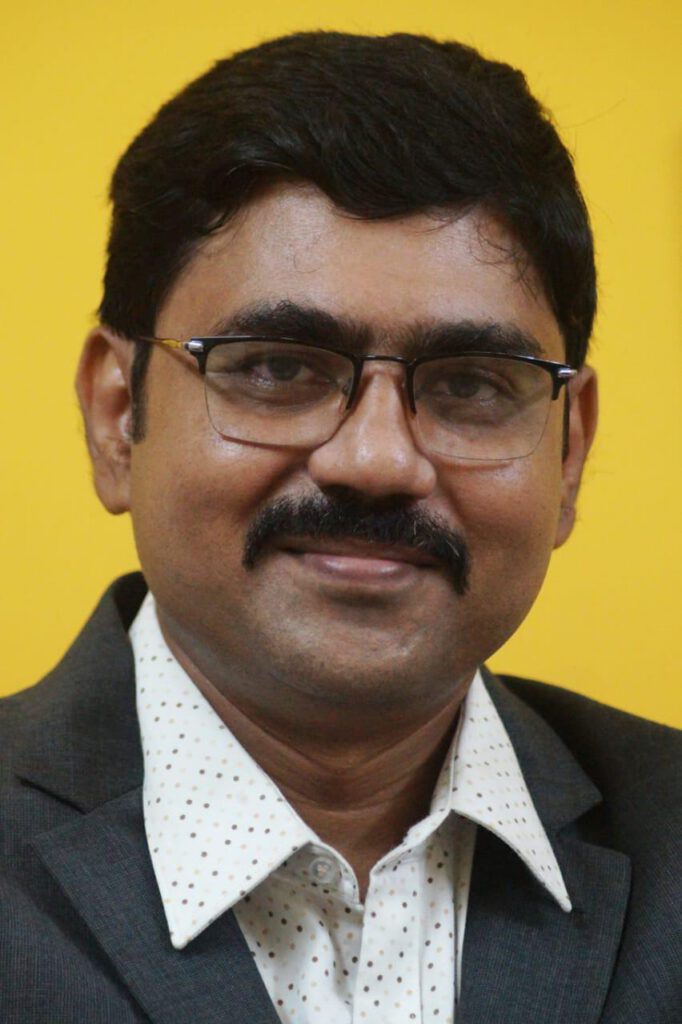
Asst. Prof. Prasanta Kumar Roy
 India
India
CURRENT POSITION
Assistant Professor, Department of Clinical PsychologyInstitute of Psychiatry – Centre of Excellence (IOP-COE), IPGME&R, Kolkata | April 2011 – Present
EDUCATION
PhD Psychology, University of Calcutta
Thesis: Comparative Efficacy of Brief Cognitive Behaviour Therapy and Brief Interpersonal Therapy in Depressive Disorders
M.Phil. Medical and Social Psychology (First Class), Central Institute of Psychiatry, Ranchi (2003)
M.A. Psychology (First Class, 64.4%), M.S. University of Baroda – Specialization: Clinical (2001)
B.A. (Hons.) Psychology (First Class, 60%), M.S. University of Baroda (1999)
UGC-NET Qualified National Eligibility Test for Lectureship, December 2003
HONOURS & AWARDS
- Indian Association of Clinical Psychologists (IACP) — Psycho Oration Award
Presented at the 48th National Annual Conference (NACIACP), Madurai, May 6, 2022, in recognition of distinguished contribution to clinical psychology and extraordinary services to promote IACP’s objectives
- Dr. T.B. Singh Memorial Gold Medal Award
Awarded at the IVth Annual Conference of Indian Psychiatric Society, Jharkhand State Branch, for the paper ‘Trait Anger in Substance Dependence: Does it Influence Impulsive Behaviour?’, Central Institute of Psychiatry, Ranchi, April 16–17, 2005
PROFESSIONAL EXPERIENCE
Head | Dept. of Clinical Psychology, IOP-COE, IPGME&R, Kolkata | June 2018 – August 2024
Clinical Psychologist (Contractual) | Dept. of Psychology, University of Calcutta | March 2006 – April 2011
Supervised clinical cases (psychometric evaluation, psychotherapy), taught theoretical papers, and co-guided M.Phil dissertations.
EDITORIAL ROLES & PEER REVIEW
Editorial Positions
- Section Editor, Psychological Assessment; Indian Journal of Psychological Medicine
- Member, Board of Editors
- Editorial Board Member; Indian Journal of Clinical Psychology
- Invited Guest Editor, Special Issue on Psychological Assessment
- Editorial Board Member SIS Journal of Projective Psychology & Mental Health
Board of Reviewers
- Indian Journal of Psychiatry
- Indian Journal of Social Psychiatry
- Journal of Psychosocial Rehabilitation and Mental Health
- Indian Journal of Psychosocial Well-being
- International Journal of Mental Health and Addictions
- The Journal of Visualized Experiments
- Open Journal of Psychiatry and Allied Sciences